Mobile External Transfer Redesign
PNC is a top-ten bank in the US, with 10 million people using its native mobile app monthly. I am the lead designer for the external transfer feature, which helps users move money from their PNC accounts to other bank accounts. I overhauled the entire mobile external transfer experience to combat a 45% enrollment abandonment rate that was costing the bank millions, streamlining the onboarding process and establishing structural consistency across all payment and transfer flows.
The Solution
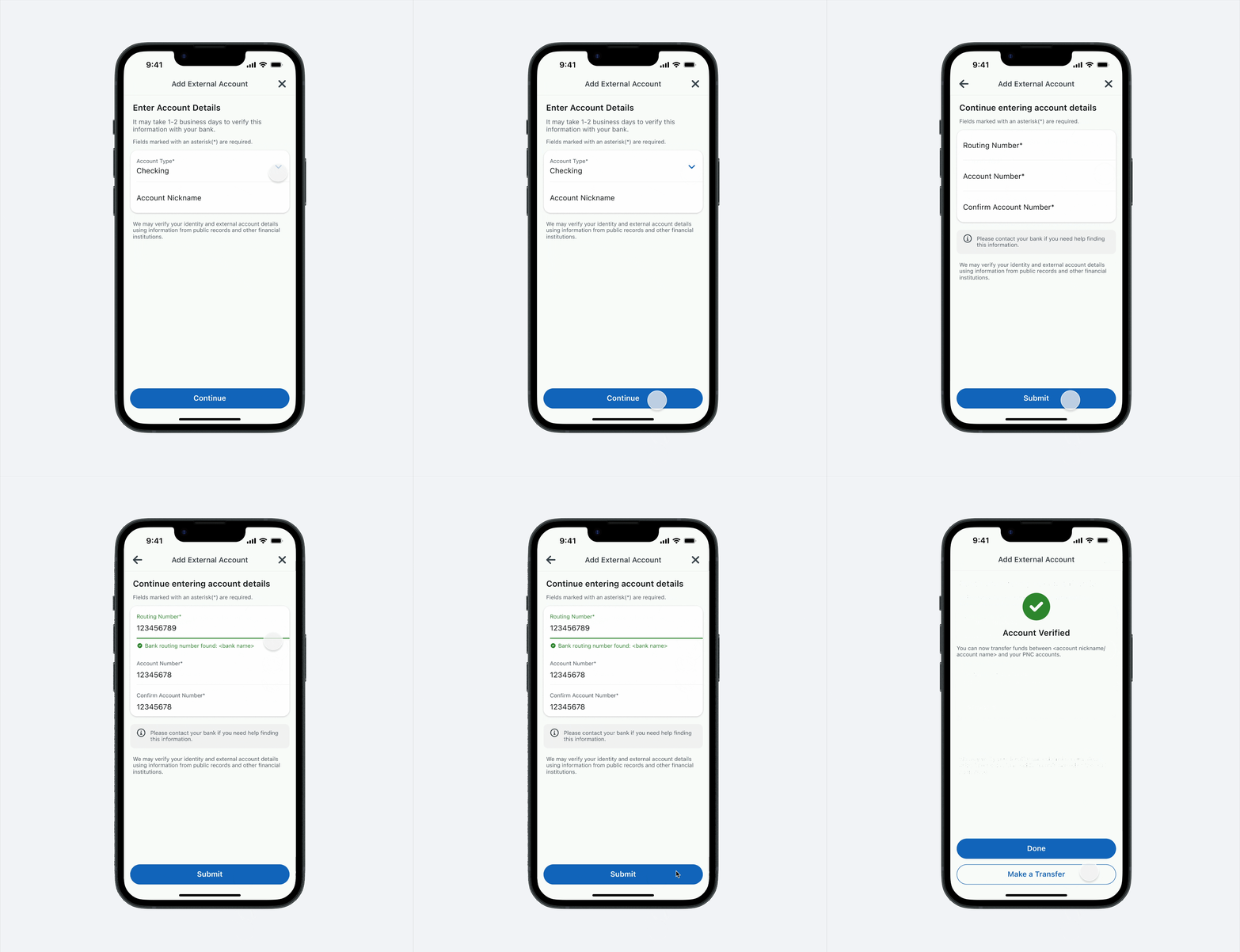
Instant verification so no wait times
Successfully aligned product, engineering, and risk partners to abandon legacy trial deposits, transitioning the platform toward real-time account verification to boost activation velocity and user trust.
Consistent Transfer Interaction Pattern
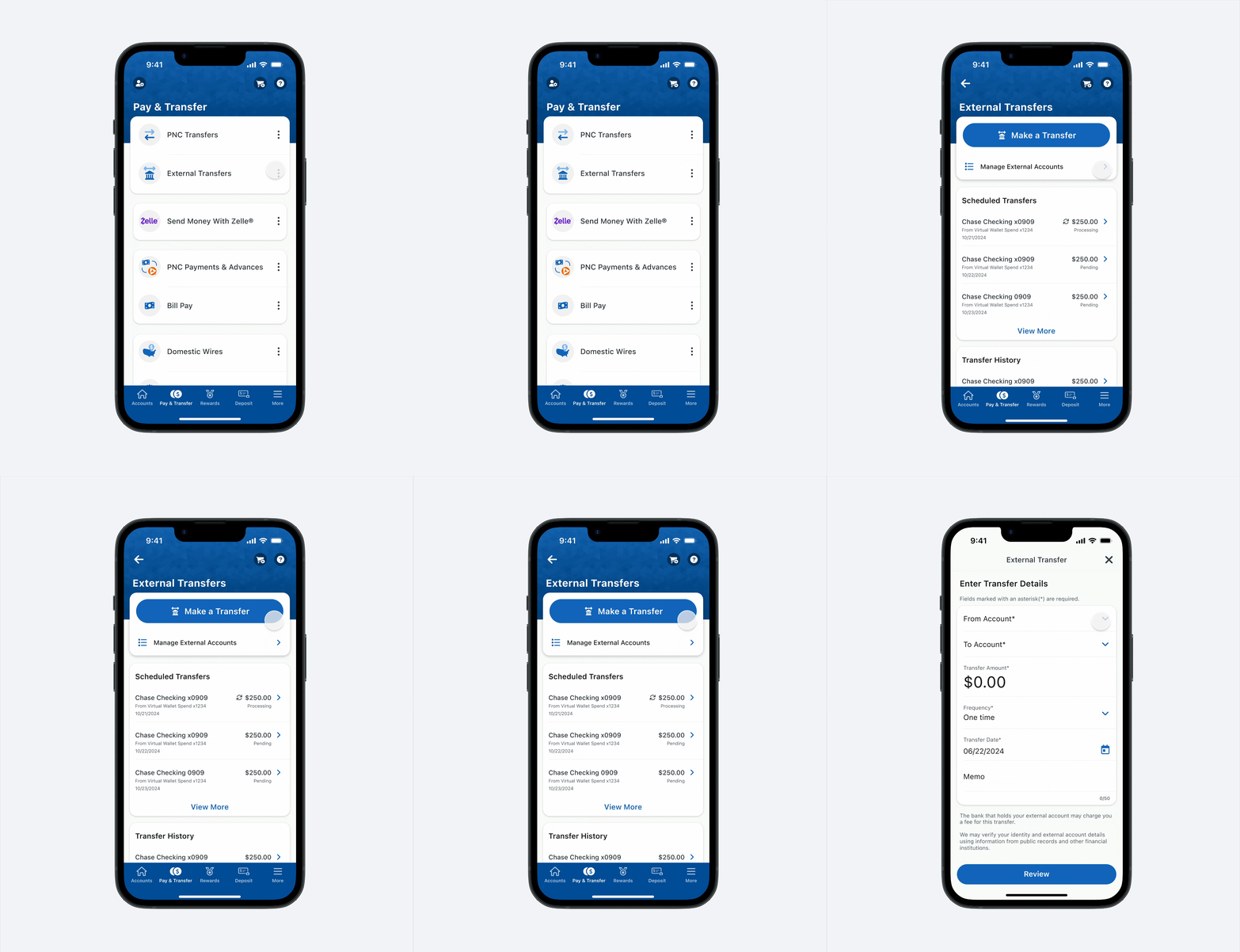
Established one consistent transfer flow from entry point to success screen so the experience felt identical whether a user started from account overview, transfers, or settings.
The Problem
External transfer enrollment was bleeding users before they ever initiated a transaction, resulting in a 35% abandonment rate partway through the process, alongside inconsistent interaction patterns during the make-a-transfer process.
Multi-day verification wait times
Trial deposits required 1–2 business days before a user could even confirm their external account, killing momentum at the exact moment intent was highest.
Redundant steps within enrollment
Enrollment forced users through separate deposit-verification and identity-verification steps that could be collapsed without compromising security.
Inconsistent interaction pattern
Inconsistent interaction patterns across the external transfer experience reduced predictability, ultimately undermining the systemic trust that is absolutely critical to a high-fidelity financial transaction flow.
Outcomes & Impact
Product already shipped to production; live in PNC’s mobile app.
- +25% improvement in enrollment completion
- 108K enrollments processed post-launch
- −49 seconds average reduction in sign-up flow time
- 544K external transfer users on the redesigned flow
- 100K+ users moved through instant verification

Deep Dive: Process, Iterations, and Trade-offs
Listening to user desire to upgrade from trial deposits to real-time verification
While trial deposits were historically favored as a secure ownership proof, we leveraged customer advocacy insights to align partners around a modern paradigm: micro-deposits are now less secure than real-time one-time passcodes and add unnecessary friction without protecting the user.

Cut enrollment process from 16 steps into 10 steps
Redesigned and consolidated a legacy 16-step pre-enrollment and post-enrollment flow into a highly optimized 10-step experience, while mapping out a future-state architecture to reduce the entire funnel to 6 friction-free steps.


Establish global pattern consistency to enable seamless, intuitive interactions
The goal across all enhancements is consistency: when the same element behaves predictably, users can complete tasks without learning new patterns.
A single, predictable input order
Led a generative card-sorting workshop to restructure the six core transaction fields, converging on a single, high-predictability input order that mirrors user mental models.

Consistent entry points, clearer guidance
Standardized transfer entry points for a consistent look, added a prominent visual tile for clarity, and included subtext for user guidance.


Clear hierarchy, distinct information levels
Established a clear visual hierarchy across all pages, ensuring content, containers, and background colors create distinction between different levels of information.

Other Contribution
AI-assisted design system building
I used AI to systematically stress-test our newly structured transaction fields — generating robust copy and data states for edge cases.

QA testing
Partnered with engineering to sequence backend verification changes alongside the UI rebuild, ensuring the compressed flow didn't outpace fraud/compliance checks.

Lesson Learned
What I’ve learned is that leadership is the driving force behind innovation and growth in the evolving field of product design. Learning through diverse experiences from users and key stakeholders has become a cornerstone of my journey, shaping my perspective and fostering continuous improvement.